


BEST SUPPLEMENT BRANDS ON AMAZON
7 Steps to Choose Reliable Online Supplement Retailers
Last Updated: November 5, 2026
Quick Summary
To choose reliable online supplement retailers, first verify who actually sells and ships the product, then confirm the seller is authorized by the brand. Check that the label matches the brand's own site, that a lot number and expiration date are printed, and that third-party certification can be verified on the certifier's site. Read the return and recall policy before you order.
- Check the "Sold by" and "Ships from" lines to see who controls sourcing and storage.
- Confirm the retailer is listed on the brand's official store locator or authorized-retailer page.
- Verify a physical address and phone number, not just a web form.
- Ask the seller how and at what temperature they store the product.
- Verify third-party certification on the certifier's own site, not a logo on the listing.
Table of Contents
- Why Where You Buy Matters as Much as What You Buy
- Step 1: Check the Retailer's Sourcing and Seller Status
- How to Tell If Vitamins Are Good Quality
- Reading the Label and Verifying Ingredient Identity
- Checking Third-Party Certification: NSF and USP Verified Supplements List
- Best Supplement Brands Third-Party Tested and Marketplace Risks on Amazon
- Your Next Step: Build a Retailer Checklist Before Your First Order
- Frequently Asked Questions
Why Where You Buy Matters as Much as What You Buy
Most lifters spend hours picking the right protein or pre-workout, then click "buy" on the first of the online supplement retailers that shows up in search. That is a mistake.
Online supplement sales are a big business, and the online supplement retailers competing for your order keep multiplying.
Here is the plain truth: a retailer's reputation does not replace checking the product. The Council for Responsible Nutrition advises shoppers to watch where they buy and to be wary of products pushed with urgency or "barely legal" claims (Council for Responsible Nutrition consumer tips on selecting supplements).
Step 1: Check the Retailer's Sourcing and Seller Status
Start with the seller, not the supplement. Find out who actually sells the product, who owns the inventory, and who is responsible if something goes wrong. Most shoppers skip this and pay for it.
Run this verification sequence before you add to cart:
- Identify the seller of record. On the product page, find the "Sold by" and "Ships from" lines. If "Sold by" is a third-party seller and "Ships from" is the marketplace, the marketplace controls storage and shipping but not sourcing. If both are a third-party seller, that seller controls everything. Know which one you are dealing with.
- Confirm authorized-seller status. Go to the brand's official site and use its store locator or authorized-retailer page. If the retailer is not listed, treat the listing as unauthorized until proven otherwise. Brands publish these lists for a reason.
- Verify the business behind the site. Look for a physical address and a phone number on the contact page, not just a web form. Cross-check the business name against state business registries and the Better Business Bureau. A real company leaves a paper trail.
- Match the listing to the brand's own page. Compare the product name, serving size, Supplement Facts panel, and label artwork. Mismatches often mean a copy, a gray-market import, or an outdated formula.
- Check who handles fulfillment. A retailer that ships from its own climate-controlled warehouse is a different risk profile than one that drop-ships from a unknown third party. Ask customer service directly: "Do you store this product yourself, and at what temperature?" A vague answer is your answer.
- Read the return and recall policy before ordering. Confirm who pays return shipping on a defective or expired item, and how the retailer communicates recalls. A seller that cannot explain its recall process does not have one.
Watch out: a polished storefront and a professional logo prove nothing. Regulators have warned about tainted products sold online. Check recall notices before you buy, not after.
Harvard Health Publishing warns that many seals of approval mean very little, so a badge on the page is not proof of quality (Harvard Health guidance on vetting supplements). If you want a deeper framework for judging the companies behind the products, see our guide to identifying high quality supplement manufacturers.
Before you add anything to cart, run through the seller checks below so you know who you are really buying from.
| Check | What to confirm | Red flag |
|---|---|---|
| Seller of record | "Sold by" and "Ships from" lines | Third-party seller with unknown storage |
| Authorized status | Listed on the brand's official store locator | Retailer missing from the brand's list |
| Business identity | Physical address and phone number on contact page | Web form only, no verifiable company |
| Listing match | Name, serving size, and label match brand site | Mismatched label or outdated formula |
| Fulfillment | Seller states storage and temperature | Vague or no answer to storage question |
| Return and recall policy | Who pays return shipping; how recalls are communicated | No clear recall process |
How to Tell If Vitamins Are Good Quality
Quality is not about the price tag. A cheap tub from a careful producer can beat an expensive one from a sloppy one. What you want to know is whether the product contains what it says, in the amount it says, and nothing it should not.
Look for these signs:
- A full Supplement Facts panel with amounts per serving, not just a list of ingredients
- A lot number and expiration date printed on the container
- Independent testing or certification you can verify yourself
- A Certificate of Analysis (COA) you can request from the seller, and our guide to how to request and read a Certificate of Analysis shows you exactly what to look for.
Certification only helps if it checks out. Harvard Health recommends looking for certification from vetted independent third parties rather than seals the company made up (Harvard Health advice on supplement certification).
Reading the Label and Verifying Ingredient Identity
Pick up the actual tub, or study the photo closely, and read the Supplement Facts panel. Check the serving size, the amount of each active ingredient, and the inactive ingredients. Be wary of vague "proprietary blend" listings that hide how much of each ingredient is in the product.
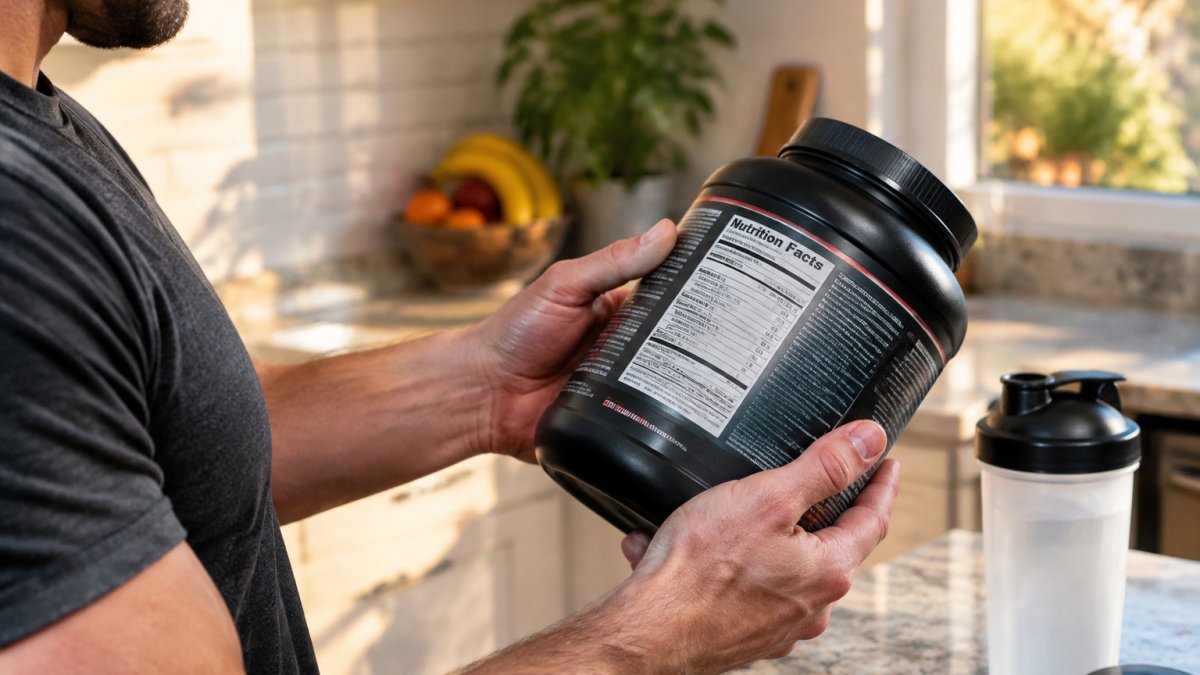
Watch out: a label can be accurate and the product inside can still be wrong. Ingredient identity is a lab question, which is why independent testing matters more than a pretty label.
Compare the label to the brand's website, the lot number, and the expiration date. If a retailer lists a product with a different name, a different serving size, or no lot number, skip it.
Checking Third-Party Certification: NSF and USP Verified Supplements List
Third-party certification means an outside lab checked the product against a published standard. Two programs are worth knowing: NSF Certified and USP Verified. Each covers different things, so read what the certification actually guarantees before you trust the badge.
Use the verified lists directly. Search the brand or product name on the certifier's own site rather than trusting a logo on a retailer page. If the product is not on the list, the claim is not verified, no matter how confident the listing sounds.
For a deeper look at what each certification means, see our guides on third-party supplement certifications and NSF Certified supplements and third-party testing.
Best Supplement Brands Third-Party Tested and Marketplace Risks on Amazon
Big marketplaces are convenient, and that convenience is exactly the risk.
The product can leave the manufacturer in good condition and still arrive degraded. Supplements are sensitive to heat, humidity, and light. A protein tub that sat in a trailer in July is not the same product that left the plant.
Marketplace and third-party seller checks
- Is the item sold by the brand itself, by the marketplace, or by an authorized seller? Check the brand's authorized-retailer list.
- Does the listing show a lot number and expiration date, or does it hide them?
- Do recent reviews mention expired, damaged, or melted product? Sort by newest and read the one-star reviews first.
- Does the seller's return policy cover expired, damaged, or counterfeit items, and who pays return shipping?
Storage, shipping, and product integrity
- Ask how the retailer stores product. Heat sensitive items like probiotics, fish oil, and certain pre-workouts should ship with insulation or cold packs in warm months.
- Check for tamper evident seals on arrival. A broken or missing seal is a stop sign, photograph it and request a return.
- Confirm the expiration date on the container matches or beats what the listing promised.
- Inspect for clumping, discoloration, or a changed smell. Those are signs of heat or moisture exposure.
Returns, recalls, and customer support
- Before ordering, read the full return policy. Look for restocking fees, shortened windows on consumables, and exclusions for opened products.
- Find out how the retailer notifies customers about recalls. A serious seller has a process; a fly-by-night operation does not.
- Test customer support before you buy. Send one question and see how fast and how specifically they answer.
Online fraud and privacy safeguards
- A price far below every other retailer is a warning, not a deal. Counterfeit and gray-market stock often undercuts the market.
- Check that checkout uses a secure connection and a recognized payment processor. Avoid sellers that only accept wire transfers or gift cards.
- Read the subscription terms before you check the box. Cancellation traps and hard-to-find opt-outs are common.
- Review the privacy policy for how payment and personal data are handled.
Watch out: buying from an unauthorized seller can mean counterfeit or expired stock, even when the brand is well regarded. For more on those dangers, read our guide to risks of buying supplements from unauthorized marketplaces.
Your Next Step: Build a Retailer Checklist Before Your First Order
Before you put a card in, run through one checklist. Score each retailer, and only buy from one that passes most items.
- The seller is the brand or a clearly named authorized retailer
- A real address, phone number, and working customer support exist
- The Supplement Facts panel is complete and matches the brand's site
- A lot number and expiration date are printed on the product
- Third-party certification is verifiable on the certifier's own site
- The return policy covers defective, expired, or wrong products
- The price is not paired with pressure tactics or "barely legal" claims
When you find a seller that checks every box, buy a small amount first and check the seal, the label, and the freshness on arrival. Then decide whether to reorder. If you want a framework for judging brands themselves, see our guide to identifying high quality supplement manufacturers.
Tiger Fitness publishes free workout plans, diet guides, fitness calculators, and a training app to help you plan your training around the products you buy. Put the checklist to work on your next order, and build your stack from products you can actually verify.
Frequently Asked Questions
Which website is the most trusted for buying supplements?
No single website earns trust on its own name. Trust comes from what the retailer lets you verify: whether it sells the brands' products directly or through authorized channels, whether its listings show lot numbers and certificates of analysis, and whether it states a clear return policy. Independent testing has repeatedly found supplements whose contents do not match their labels. That is why you should judge any online store by its verification practices, not its reputation alone, and check each product's independent certification before you buy.
How can I tell if an online supplement retailer is reliable?
Check four things before you order: who the seller is, where the product ships from, what the return and recall policy says, and whether the store lists the brand's full contact details. Confirm that the product is sold by the brand or an authorized dealer, not an anonymous third-party seller. Look for a physical address, a working customer support line and a published policy for handling recalls. Harvard Health Publishing cautions that many seals of approval are meaningless, so verify any certification directly on the certifier's own website rather than trusting a badge on the product page.
How do I check whether a supplement is third-party tested?
Start with the product label and the brand's website. Look for the name of an independent certifier such as NSF or USP, then search that certifier's own database using the product name and lot number. Certification applies to a specific product and sometimes a specific formulation, so a certified brand does not guarantee that every item in its line is certified. If the brand cannot tell you which lots were tested or where to find the results, treat the claim as unverified.
Is it safe to buy supplements from online marketplaces?
It can be, but marketplaces add risk because the listing and the seller are often different parties. Third-party sellers may store product poorly, ship expired stock or sell counterfeit items. Before buying, confirm the seller is authorized by the brand, check the expiration date on arrival, and inspect the seal and packaging. Keep your order records and report any product that looks tampered with. When in doubt, buy from the brand's own store or a retailer that states clearly where its stock comes from.

Leave a comment