


HEART RATE DATA
7 Steps to Integrate Heart Rate Data With Strength Training
Last Updated: November 19, 2026
Quick Summary
Integrating heart rate data with strength training means logging peak heart rate per set, heart rate at the start of the next set, and rest length in seconds alongside RPE, reps in reserve, and volume. Pair the numbers with how each set felt, then review the trend weekly instead of judging a single session.
- Chest straps beat wrist sensors for lifting because they stay put when your arms move and read changes faster.
- Rest under 60 seconds keeps heart rate elevated; 3 minutes or more allows near full recovery for heavy compound lifts.
- Take your HRV reading every morning at the same time, in the same position, before coffee.
- If heart rate is high but RPE is low, extend rest 30 to 60 seconds or drop volume slightly instead of adding load.
- Three sessions pointing the same direction is a signal; one bad session is noise.
Ready to train smarter with your heart rate?Tiger Fitness has the gear, guides, and supplements to back your data-driven training.
Track Your Training
Table of Contents
- Why Heart Rate Data Belongs in Your Strength Training Log
- Heart Rate Monitoring During Strength Training: What the Numbers Actually Mean
- Picking a Heart Rate Monitor for Weightlifting That Survives the Set
- Step 1: Set Up the Log and Pair Your Sensor
- Step 2: Read Heart Rate Across Lifts, Set Lengths, and Rest
- Strength Training Rest Periods and Heart Rate: The Recovery Between Sets
- Heart Rate Variability and Strength Training Recovery: The Morning Check
- Step 3: Pair Heart Rate With RPE, Reps in Reserve, and Volume
- Frequently Asked Questions
Why Heart Rate Data Belongs in Your Strength Training Log
Your heart rate doesn't care how tough you think that set was. It tells the truth.
Heart rate data is the record of how hard your cardiovascular system works during a session.
A 2019 study from researchers led by C. Schneider, published in PMC tracked heart rate and heart rate variability through strength work, HIIT overload, and recovery.
Here's what most lifters miss. Heart rate tells you how much internal load a session created. Two guys squat the same weight. One cruises. One gets wrecked.
Below, we'll walk through exactly how to set up your log, read the numbers across different lifts and rest periods, and pair heart rate with RPE and volume.
Heart Rate Monitoring During Strength Training: What the Numbers Actually Mean
Heart rate monitoring during strength training captures a different signal than cardio does. Lifting sends heart rate up in sharp spikes, then drops it during rest. That spike-and-recover pattern is the data worth watching.
Here's how a set actually plays out:
- You start the rep. Heart rate climbs fast.
- The set ends. Heart rate peaks.
- You rest. Heart rate falls.
- The next set starts. The cycle repeats.
The size of the spike and the speed of the drop tell you more than the peak alone. A heart rate that stays high between sets means you're not recovering. That's a signal to cut rest short? No, the opposite.
A 2024 review in the Journal of Strength and Conditioning Research found that heart rate variability can help assess training status, adaptability, and recovery. That's the real value here. Not one number. A trend.
Track your heart rate data over weeks, not days. One session tells you almost nothing.
Picking a Heart Rate Monitor for Weightlifting That Survives the Set
A heart rate monitor for weightlifting needs two things: a secure fit and a fast refresh rate. Chest straps beat wrist sensors for lifting because they stay put when your arms move and they read changes faster. Optical wrist sensors shine light into the skin and read blood flow.
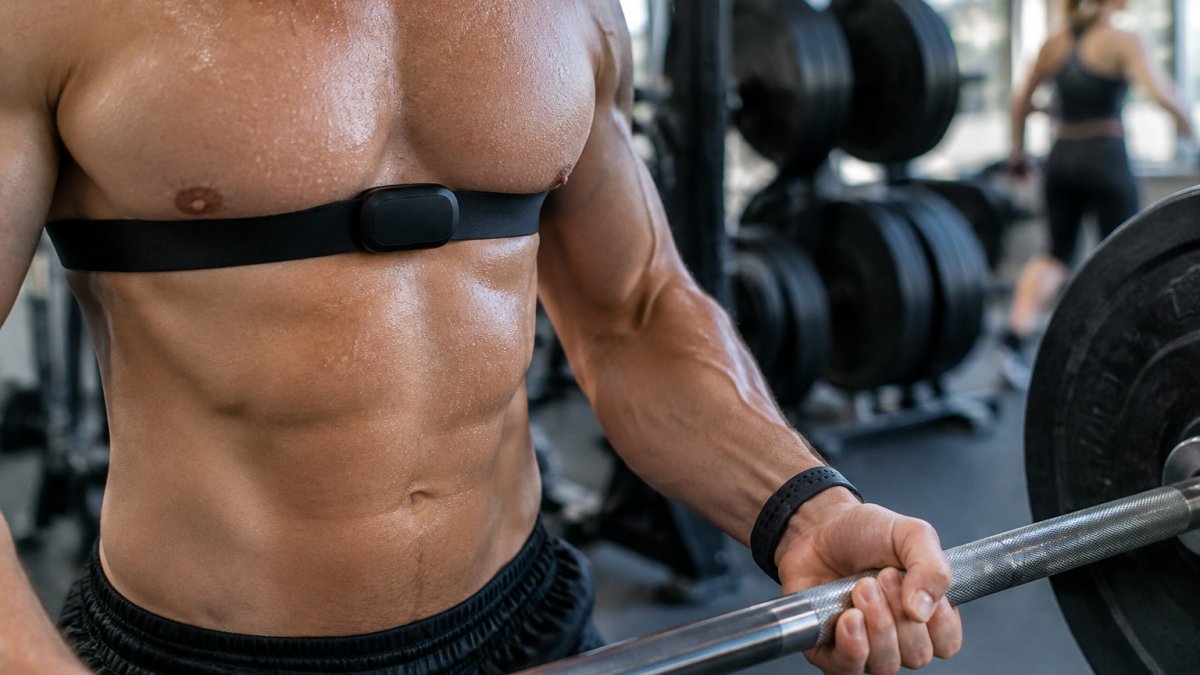
Wrist optical sensors struggle during lifting. Flexed wrists, gripping, and rapid arm movement all hurt accuracy.
What to look for:
- Chest strap with a snug, elastic band that won't slide under a shirt
- Bluetooth or ANT+ pairing to your training app so data lands in the same log as your sets
- A refresh rate that updates every few seconds, one-second is ideal for lifting
- Battery life that covers a full training block without a mid-session dead strap
- A strap you can rinse; salt and sweat kill electrodes fast
Placement matters more than people think. Put the strap just below the sternum, snug but not tight enough to restrict breathing. Moisten the electrodes before your first working set. Check the live reading before you touch the bar.
Watch out: A loose strap reads low or drops out entirely mid-set. You'll get gaps in your data and think your heart rate tanked when it didn't.
How to validate your setup: do one easy warm-up set and watch the trace. If the number jumps around wildly or flatlines while you're clearly working, fix the strap before you log anything.
Step 1: Set Up the Log and Pair Your Sensor
Set up your log before you touch a weight. Pair the sensor, name the session, and log the basics: lift, weight, sets, reps, and rest. Then let the heart rate data fill in.
Your setup checklist:
- Pair the chest strap to your app and confirm a live reading
- Create a session log with the date and training block
- Enter the planned lifts, sets, and target reps
- Set a rest timer you'll actually use
- Note sleep and stress level before you start
What to Record Beyond the Heart Rate Number
The number alone is useless without context. Log these alongside it:
- Peak heart rate per set. Shows how hard each set hit you.
- Heart rate at the start of the next set. Shows recovery between sets.
- Rest length in seconds. Without this, the heart rate numbers mean nothing.
- RPE per set. Your own effort rating, 1 to 10.
- Reps in reserve. How many reps you had left.
- Session length. Total time from first set to last.
This is where most logs fall apart. People record the heart rate and skip the rest. Then they can't explain why one squat day spiked higher than another.
Step 2: Read Heart Rate Across Lifts, Set Lengths, and Rest
Different lifts produce different heart rate patterns. A heavy set of five on squats looks nothing like a set of twenty on leg press.
Big compound lifts spike heart rate fast. Long sets push it higher and keep it there. Short heavy sets spike and drop. Isolation work barely moves the needle.
Read it like this:
- Heavy low-rep sets: sharp spike, quick drop. High cardiac stress, short duration.
- High-rep sets: slower climb, higher peak, slower drop. Big internal load.
- Supersets: heart rate never fully recovers. Watch for stacking fatigue.
- Long rest: heart rate returns near baseline. Shorter rest keeps it elevated.
If you want to understand your stimulant-driven heart rate response, know what's in your pre-workout. Our Cellucor C4 Ultimate Strength Pre Workout page lays out the formula so you can see what you're taking before you train.
Different lifts and set styles produce different heart rate patterns, so read the trace against the type of work you did.
| Set type | Heart rate pattern | What it means |
|---|---|---|
| Heavy low-rep sets | Sharp spike, quick drop | High cardiac stress, short duration |
| High-rep sets | Slower climb, higher peak, slower drop | Big internal load |
| Supersets | Never fully recovers | Watch for stacking fatigue |
| Long rest | Returns near baseline | Shorter rest keeps it elevated |
Strength Training Rest Periods and Heart Rate: The Recovery Between Sets
Strength training rest periods and heart rate are linked tighter than most lifters realize. The length of your rest decides how much your heart rate drops before the next set, and that drop is a recovery signal.
Short rest keeps heart rate high. Great for conditioning, bad for heavy strength work. Long rest lets heart rate fall close to baseline. Better for max effort, but it stretches the session.
Track this:
- Rest under 60 seconds: heart rate stays elevated, next set starts fatigued
- Rest 90 to 120 seconds: moderate drop, good for hypertrophy work
- Rest 3 minutes or more: near-full recovery, best for heavy compound lifts
Heart-rate recovery is the drop in heart rate in the first minute after a set. A faster drop generally means better conditioning. A slow drop means you're carrying fatigue.
Use the number, don't worship it. If your heart rate won't come down and your reps are falling off, end the session.
Heart Rate Variability and Strength Training Recovery: The Morning Check
Heart rate variability and strength training recovery connect through your morning reading. HRV is the variation in time between heartbeats. Higher variability generally points to a recovered, ready body. Lower variability points to stress or fatigue.
Take it the same way every morning. Same time, same position, before coffee. Log it next to your training data.
What the trend tells you:
- HRV steady or rising: your body is handling the load. Keep pushing.
- HRV dropping for several days: back off volume or intensity.
- HRV flat and low: check sleep and stress before you blame training.
A 2025 study in Scientific Reports looked at acute HRV responses to intensity-matched resistance exercises. It confirms HRV reacts to lifting, but it's one measure among several. Don't treat it as the whole picture.
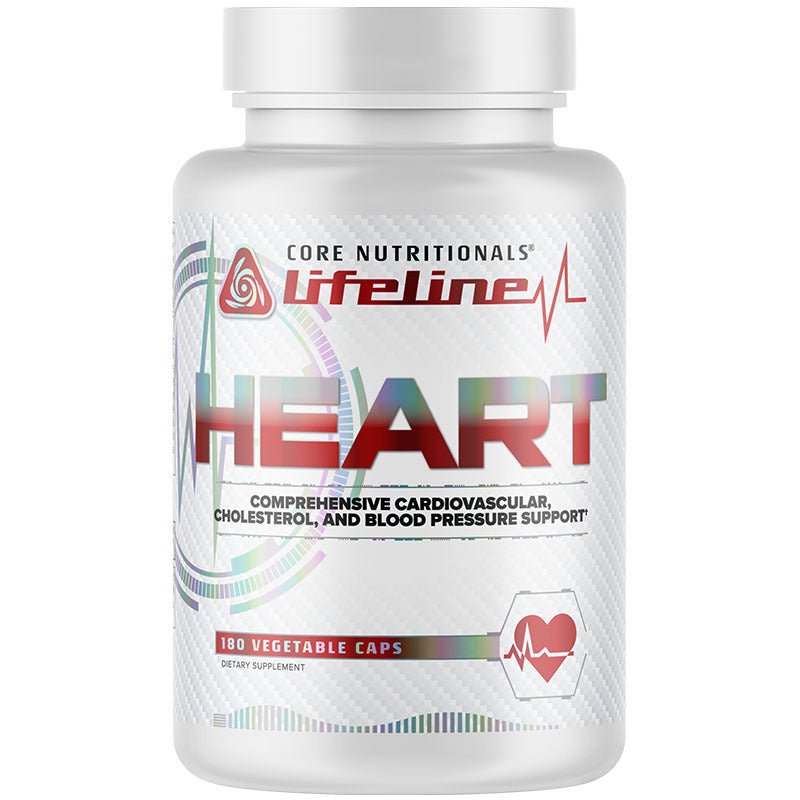
If your morning HRV is dragging, sleep is a common place to look first. Our Sleepy Joe Full Spectrum Sleep Recovery Formula is built for exactly that. And if you want to support the cardiovascular system you're tracking, our Core Nutritionals Lifeline Heart page covers circulation support.

Step 3: Pair Heart Rate With RPE, Reps in Reserve, and Volume
Heart rate data gets stronger when you pair it with RPE, reps in reserve, and total volume.
RPE is your effort rating from 1 to 10. Reps in reserve is how many reps you had left in the tank.
How they work together:
- A set at RPE 9 with 1 rep in reserve should spike heart rate hard
- If heart rate barely moves at RPE 9, your sensor or your rating is off
- High volume weeks should show higher internal load across the board
- Low heart rate at high RPE across several sessions is a fatigue red flag, not a fitness win
Here's the decision framework most articles skip. Use it set by set and week by week:
If heart rate is high and RPE is high: you're working hard and it feels hard. That's honest. Keep the plan unless RIR hits zero before your target reps.
If heart rate is high but RPE is low: your cardiovascular system is the limiter, not your muscles.
If heart rate is low but RPE is high: your muscles are failing before your heart is working.
If heart rate won't recover between sets and RIR is falling: end the session or cut the remaining sets.
If you want a structured block to apply this monitoring to, our 8 Week Overreach Training Ebook gives you the program to plug the data into.

The method is repeatable: log heart rate, RPE, RIR, and volume every session. Review weekly.
Frequently Asked Questions
Does strength training elevate your heart rate enough to matter?
Yes. A 2019 study by C. Schneider and colleagues tracked heart rate and heart rate variability through strength training and HIIT overload plus recovery, and the lifting sessions produced real cardiac stress. Heavy sets of squats or deadlifts can push you into higher heart-rate zones, especially on high-rep or short-rest work. That said, heart rate data alone does not capture the full load of a strength session, so pair it with reps, sets, and RPE instead of treating the number as the whole story.
How do you use a heart rate monitor for weightlifting without the readings jumping around?
Chest straps hold position better than wrist optical sensors when your forearms flex under a bar. A 2026 Apple heart rate accuracy study reported better session-level average heart-rate accuracy in 11 of 12 comparisons for overall workout and daily living, but the supplied result does not identify the comparison devices or confirm strength sessions were included. Wear the strap snug under the pec, wet the electrodes, and judge trends across a whole session rather than single spikes during a set.
Can heart rate variability and strength training recovery be tracked together?
A 2024 literature review by J. S. Addleman and colleagues in the Journal of Strength and Conditioning Research reports that studies suggest HRV can help assess training status, adaptability, and recovery after a training program. Take the reading at the same time each morning, log it next to your lifting data, and watch the trend over weeks. The same review frames HRV as one possible measure, not a complete picture of strength-training load or readiness.
How long should you rest between strength training sets, and what should heart rate do?
Rest long enough that your next set matches the quality of the last one. Watch how fast your heart rate drops during the rest interval: a slow return across sessions is a signal that fatigue is stacking up. Log rest periods next to the heart rate data so you can see the pattern. For heavy compound work, longer rests usually keep output high; for accessory and higher-rep work, shorter rests drive more cardiovascular response.

Leave a comment